
Self-Realisation in the West?
The Map is Missing and the Path is Buried

Care to sit on a hard pew in elaborate clothes to worship a God poised to smite thee with fire and brimstone for the thought of swearing? As a girl taught science, left brained ego said Christianity was 100% obsolete. Right brain whispered, ‘The light...’
Life is truly a Divine Comedy, we just don’t know it until we gain metaphysic perspective, also known as Self Realisation. ‘Til then, we’re blindly feeling our way through a dark labyrinth, hoping for the best as crawling things crunch under foot.
In 1893, the World Parliament of Religions first met (in an attempt) to create a dialogue of faiths. A random blogger who introduced the idea last week subsequently revealed his Christian faith and deemed the Parliament of Religions a satanic idea. In any case the next meeting is in the USA, mid-August, 2023.
In the Vedanta, Tao, Islam and other intact esoteric doctrines, Self Realisation is the purpose of life. The modern western church guides one to be & do good (nebulously defined); and accept guilt for sins regardless of how perfect one strives to become.
The root of the word ‘Veda’ in Sanskrit is to see (reality). The root of Christianity is christo, anointed (with oil or chrism). One is ‘anointed’ with oil that can be physiologically raised from the base of the spine to ignite the pineal gland which produces the ‘stone’ or glass, also known as the All-Seeing Eye, Christ Consciousness, the Ark of the Covenant (God’s Promise), Eye of God, Crystal Skull, Enlightenment, the Holy Grail… the expressions are legion, as are the ways to achieve the end goal.
Metaphysic doctrines of the world, though expressed differently, are the same in essence. Some have a clearer path to Self-realisation than others. The churches of the english-speaking world only received the esoteric doctrine & rites, but they came without a lifestyle path, ie. the Tao has Confucianism — a way to live in the real world.
In the original 1893 World Religions meeting, Vedanta representative Swarmi Vivekananda (1862–1902), received a two minute standing ovation from the seven thousand strong crowd when he first welcomed his audience, and again at the end of his address. He spoke of India’s great spiritual heritage that day, but spoke about eliminating the caste system, promoting science and industrialisation, ‘uplifting’ the people when he spoke in the East, perhaps with the idea of greater common unity.
Guénon spoke of Vivekananda in Theosophy: History of a Pseudo-Religion;
“[...] Swami Vivekananda, […] completely distorted the Hindu doctrine of ‘Vedanta’ under the pretext of adapting it to the Western mentality. The pseudo-religion invented by Vivekananda had a certain success in America, where it has still a certain number of ‘missions’ and ‘temples’, just as it does in Australia. Of course it had nothing to do with ‘Vedanta’ except the name, for there could not be the least connection between a purely metaphysical doctrine and a sentimental and consoling ‘moralism’ differing from Protestant preaching only in the use of a somewhat specialized terminology.”
Perhaps the West’s current trajectory wasn’t so obvious back then. Perhaps it was.
Perhaps Vivekananda hoped for an alchemic marriage between the two hemispheres…
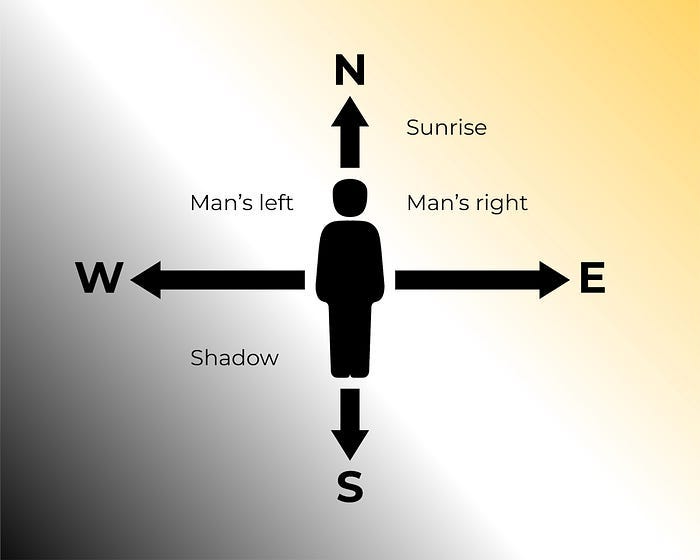
“We behave like people who have right hemisphere damage,” says neuroscientist Iain McGilchrist, author of The Master and His Emissary: the Divided Brain and the Making of the Western World:
“Many Western problems stem from the left hemisphere dominating our lives. If the detached, highly focused attention of the left hemisphere is brought to bear on living things, and not later resolved into the whole picture by right-hemisphere attention which yields depth and context, it is destructive.
“The machine is the model favoured by the left hemisphere. It has become the image through which we understand — and make — our world. Seen through the over-confident left, consciousness and the sacred are shown to be illusory. But when the whole brain is integrated with the whole body, they are reality. The sacred is as real as the material.
The most fundamental truths can ultimately be expressed only in terms of poetry.’
Returning again to India’s representative in the Parliament of Religions of 1893:
Vivek means ‘discerning’ and Ananda translates to ‘bliss’. Swarmi Vivekananda followed a spiritual path from a young age. Such a path is more readily discerned in India because sacred spiritual reality is sewn so firmly into the fabric of the culture.
Metaphysician and artist Ananda Coomaraswamy, (1877–1947, raised and educated in England) said in ‘Dance of Shiva’ (published 1918), “If asked what inner riches India brings to aid in the realisation of a civilisation of a world- the answer must be in her religions and her philosophy and her constant application of abstract theory to practical life.
Let us understand first that what we see in India is a cooperative society in a state of decline. Western society has never been so highly organised, but in so far as it was organised, its disintegration has proceeded much further than is yet the case in India. And we may expect than Europe, having sunk in to industrial competition first, will be the first to emerge. The seeds of a future co-operation have long been sown, and we can clearly recognise a conscious and […] unconscious effort towards reconstruction.”
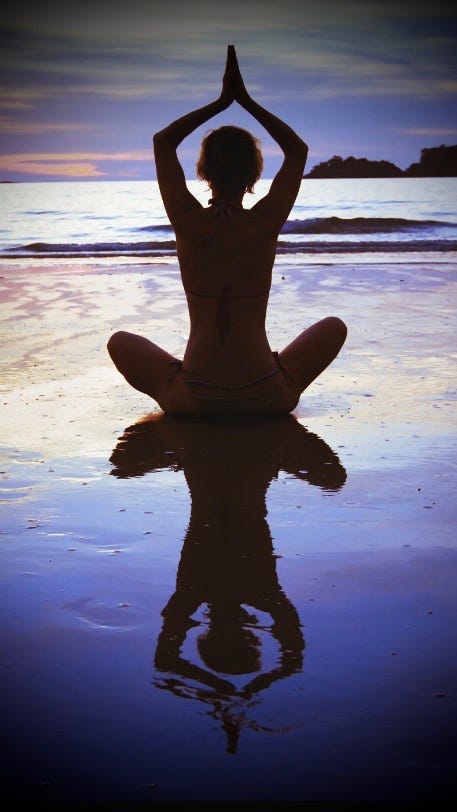
Rather than appear as one who wishes to snip the few dangling threads of culture to which the West yet cling by importing other cultures en mass, it is the import and adoption of their philosophy of a transcendent reality of the Eastern cultures which could save the western collective from its godless, mechanically scientific perspective.
The western schools, technical institutes and universities in the last seventy years ensured fine art was paralysed by commercial thirst. The right mind was rarely free to follow its natural, god-given inspiration, limiting itself to what would ensure egoic survival — forcing the very philosophy of fine art to fit in to the free market.
Historically, artists were supported in India so the survivalist ego had little power over the right mind. The Hindu artists treated their art as a form of yoga (lit. ‘yoking’ to their highest nature), identifying aesthetic emotion which is felt when self (ego) is in communication with Self — Self being one’s highest nature, closest to God, the Source or the Absolute. Western fine artists still exist, albeit an improbable minority.
India’s Brahman (spiritual caste) successfully applied abstract (right brain) philosophy to the practical (left brain) problems of life, founding a social order and applying their philosophy through ideal heroes for the guidance of future generations. They clarified the unification of the ego with the spiritualised right as Man’s highest good and his path to absolute freedom. Not ‘One God,’ but Oneness; unity as an internal realisation.
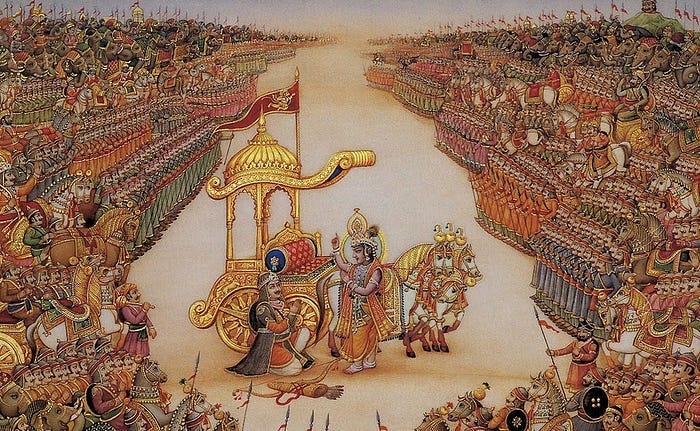
Ananda Coomaraswamy recognised the critical point of religious sociology is simply that not everyone is driven to know Self and spirit to the same degree. The following is rather freely copied and edited again from his book, ‘The Dance of Shiva’;
“If one takes life as a whole, Self-realisation must be its purpose. Brahman avoid ‘good and evil’ and use instead ‘knowledge’ and ‘ignorance’. As knowledge increases, a man will assert himself from a sense of duty, but this doesn’t mean the ignorant are in sin.
“By calling self-assertion of the ignorant not sin but youth, one suddenly realises forbidding satisfaction of the thirst of youth is unreasonable because suppression of desires breed pestilence.

“The Brahman did not presume to inflict their austerity upon society — society must provide for the enjoyment of all pleasures by those who wish for them.
“Material preoccupations are legitimate for those on the outward path (the path of Western society), but “beyond this stage no civilisation can progress unless subjected to the creative will of those who have passed beyond the stage of most extreme egoism.”
So here we are.
Please to meet Shiva the Destroyer, Mr. Western.
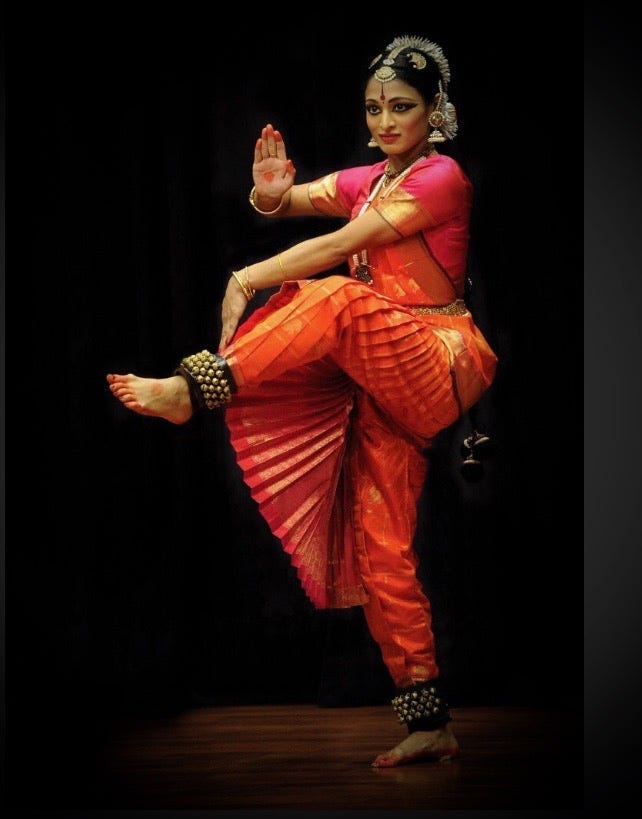
Western youth ‘back in my day’ was forced to choose between Mammon wor$hip resulting in spiritual death; and/or suppression of desires (and thoughts) through organised religion; and/or philosophy as a stale university subject obtained through crippling debt, qualified to work in a government position and to quote Nietzsche.
The option few chose (I chose) was to walk away; try out the Hero’s Journey; gamble everything knowing one might at very least be furnished with a slim chance of discovering the true purpose of life — to ‘see God face to face and live.’
Western religion does contain an hermetic path for those who seek it, however its hidden nature is also its most significant problem. Simply put — where the hell is it?
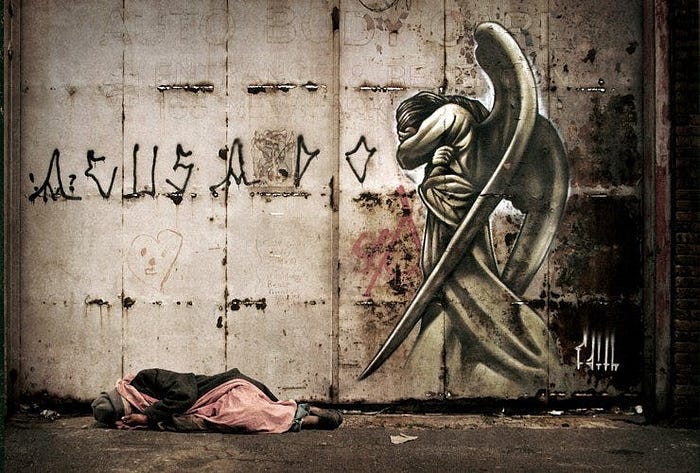
One is not encouraged to ‘go within’ in organised exoteric religion because the western church is an external organisation ‘tithing’ to the tune of billions per year.
Tithing was originally a meditative instruction to temporarily release the tight hold of the intellectual left brain in favour of the deeper, broader, more colourful, contextual right, as a means to balance the hemispheres — to ‘anoint’ the pineal gland in the brain — to realise Self and understand universal reality as it is.
The Bible says quite explicitly, ‘The Kingdom of God is Within You,’ but the churches instructional interpretation of the Bible to ‘go within’ is lost in stale rites and dogma.
So how to achieve Self-Realisation without a coherent path?
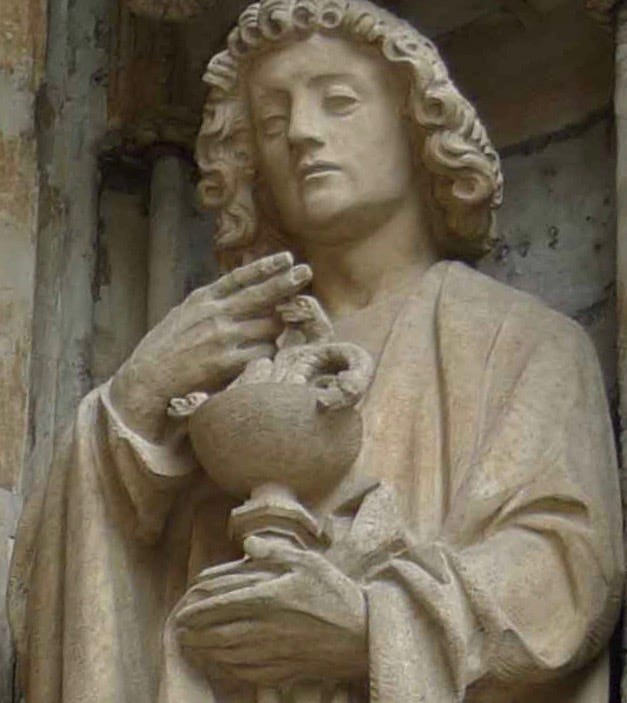
Some argue for Hermeticism/Christian Hermeticism or an eastern Orthodox doctrine, Manichaeism from Persia holds the same truths as the Vedanta for example, and if those who guide us spiritually would reveal these hidden worlds instead of burying them under layers of materialism, parable and metaphor they could even become the future of European spiritual thought. Others argue the damage has been done, that the chalice has been poisoned. Time will tell.
Frenchman René Guénon (1886–1951), arguably the greatest metaphysician in the west, was unable to see a clear, pure pathway, so he embraced Islam’s intact esoteric doctrine. Another French author, Savitri Devi, turned to the Vedanta.
English seeker, Alan Watts turned to the Eastern Tao and innumerable westerners follow such examples every month.
The reason for living is to find ones God-given, primordial Self where one finds ‘Truth, consciousness, bliss’, or satchitananda as they call it in the Vedanta.
The path to such a Divine discovery is found in Truth’s essence, wherever one can discern it in these darkest hours of illusion before the inevitable dawn.